
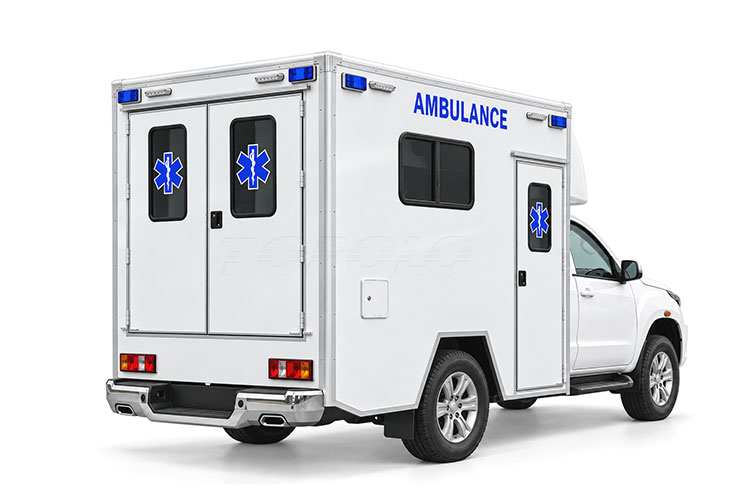
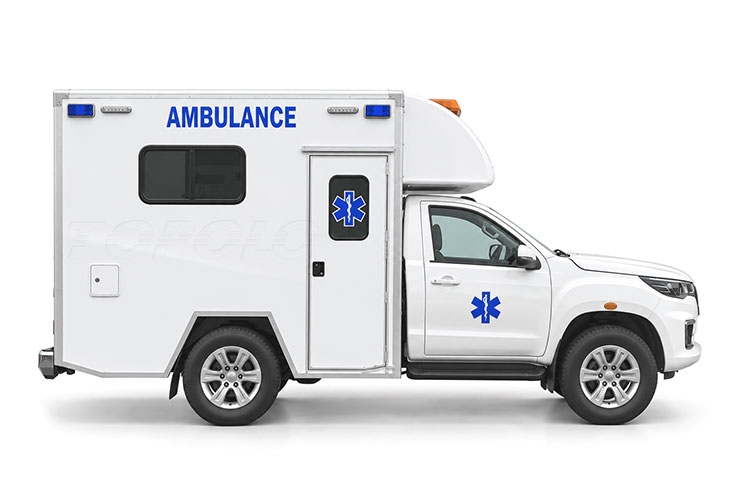


A streamlined wind deflector is installed at the front of the ambulance body. Constructed from lightweight, high-strength FRP (fiberglass-reinforced plastic), it serves the dual purpose of protecting equipment and optimizing aerodynamics.
- Equipment Protection
The deflector effectively shields the air conditioning unit mounted at the front of the vehicle body, mitigating the impact of direct sunlight, rain, snow, and external environmental factors, thereby enhancing the equipment’s durability and operational reliability.
- Reduced Wind Resistance
The streamlined design improves airflow distribution while the vehicle is in motion, reducing air resistance and increasing driving efficiency; it also helps lower wind noise and energy consumption during high-speed travel.
Description
Body Specifications
| Dimensions (L×W×H) | 2600mm x 1900mm x 1800mm or customized |
| Box panels | Gelcoat FRP (GRP) skin foam core sandwich panels |
| Panel thickness | 20–50 mm |
| Door design | Rear door + side door |
| Door frame | 304 stainless steel or aluminum alloy |
| Hinge | 304 stainless steel or aluminum alloy |
| Connecting profile | 6061 or 6063 aluminum alloy extrusion profile |
| Air conditioner | Thermo King, Carrier, etc. |
| Wind deflector | FRP (Fiberglass Reinforced Plastic) |
| Customizable accessories | Signal lights, windows, doors, interior cabin lights, bumper strips, etc. |
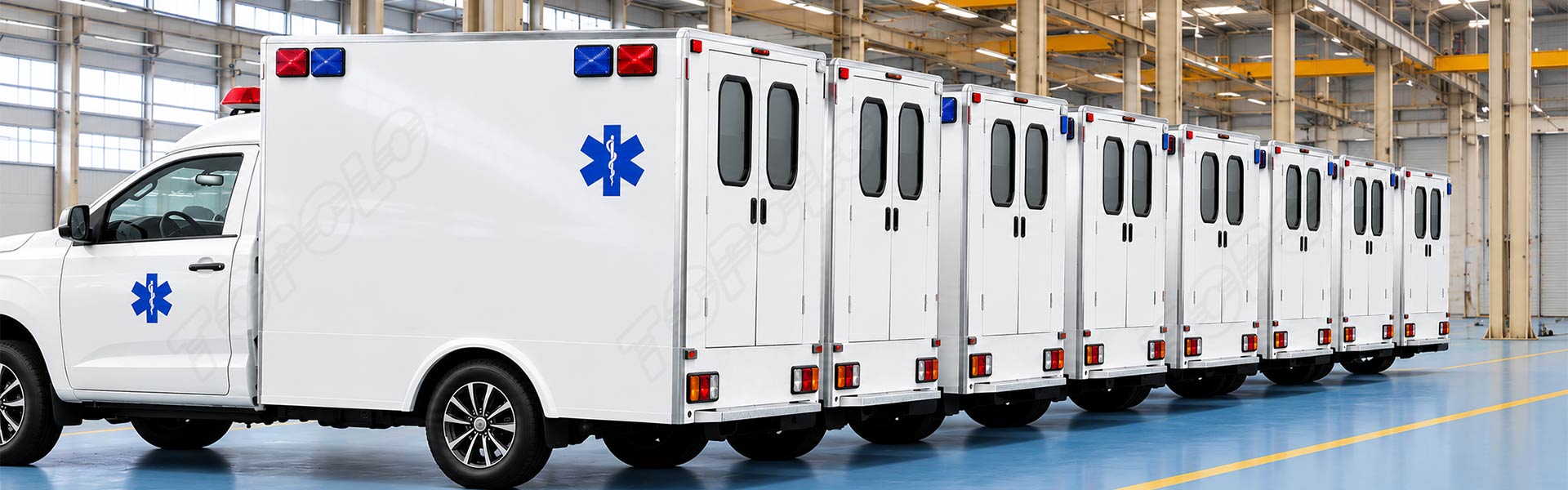
TOPOLO Provides Professional Manufacturing Solutions for Medical Vehicle Bodies
- As a specialist manufacturer of box bodies, TOPOLO is dedicated to providing customized medical vehicle body solutions to hospitals, medical institutions, emergency response organizations, and other clients.
- Leveraging robust manufacturing capabilities, a professional design team, and extensive experience in vehicle body customization, TOPOLO delivers flexible, efficient, and reliable solutions tailored to the specific operational scenarios and functional requirements of various medical vehicles.
- We stay abreast of global trends in the specialized vehicle market, continuously optimizing our product designs and manufacturing processes. We provide high-quality products and technical support to vehicle upfitters, distributors, and specialized vehicle manufacturers worldwide, helping our clients enhance their upfitting efficiency and market competitiveness.
Composite Structures
Enhancing Vehicle Body Performance
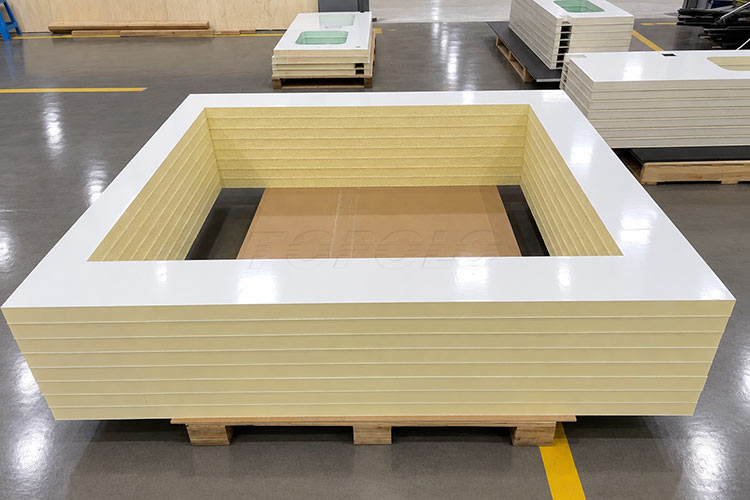
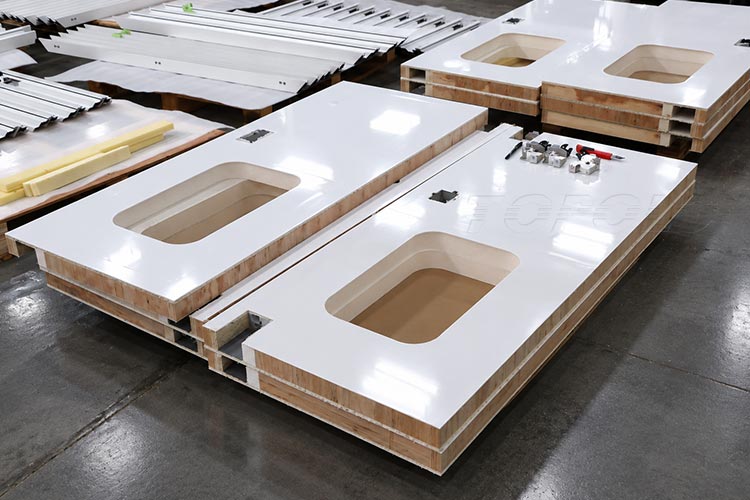
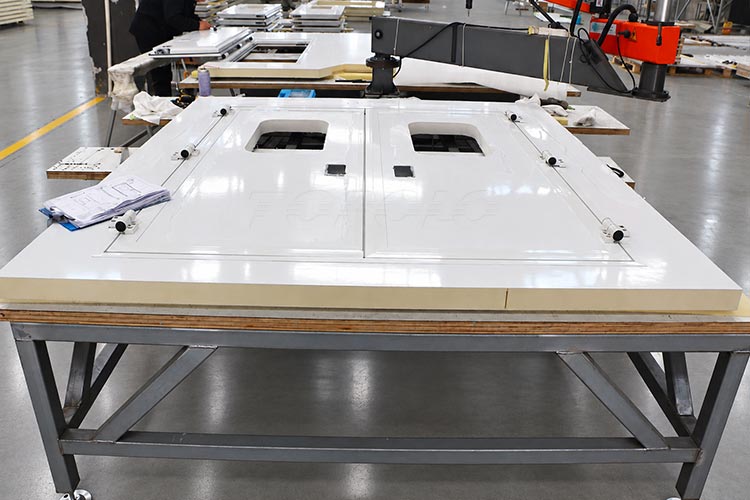

TOPOLO has developed a series of lightweight FRP (GRP) insulated panels with composite skins. Compared to metal panels, these offer significant improvements in reducing vehicle weight while enhancing thermal insulation, structural strength, and aesthetic appeal.

Modular Design
Solving Challenges in Long-Distance Transport and Rapid Assembly
- The vehicle body can be disassembled for transport—utilizing CKD (Completely Knocked Down) or SKD (Semi-Knocked Down) modes—to the user’s assembly site. By breaking the body down into panel kits, transport space is optimized, thereby reducing costs associated with cross-border and intercontinental shipping.
- Pre-assembled kits offer significant advantages for users who wish to handle assembly and accessory installation themselves; the process is simplified, as the body is divided into several pre-assembled components that merely need to be joined together.
Universal Ambulance Subframe Platform
A Standardized Structural Foundation for Modular Ambulance Bodies
TOPOLO has developed a universal ambulance subframe platform that can support four to six selected Ford, Isuzu, Nissan and Toyota pickup chassis within a defined engineering compatibility range. Instead of redesigning the complete subframe for every ambulance conversion project, the platform combines a standardized load-bearing structure with chassis-specific interface components.

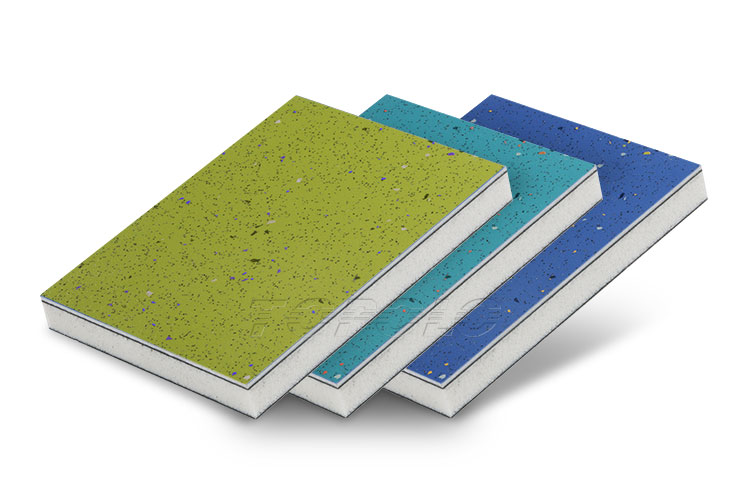
Ambulance Composite Flooring
Composite flooring combine comfort, lightweight properties, durability, moisture resistance, structural strength, and ease of maintenance. Its multi-layer composite structure helps absorb vibrations and dampen the sensation of bumps during transport, creating a more comfortable environment for both patients and medical personnel. Additionally, the integrated panel design simplifies installation, eliminating the need for extra surface layering or complex on-site assembly.