

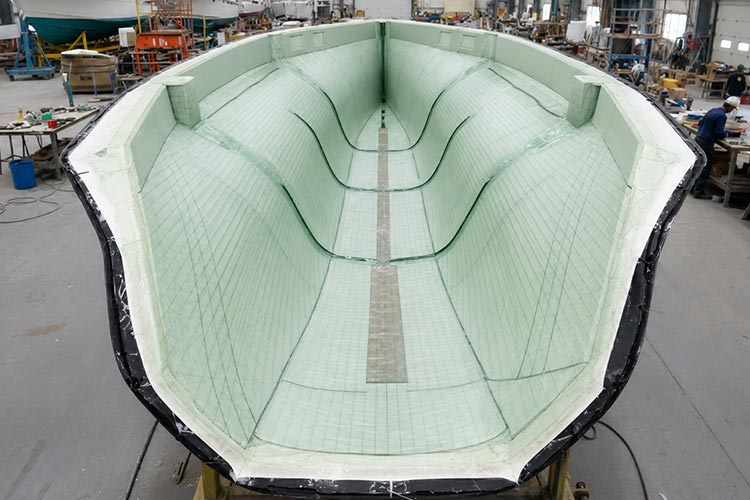
More and more ship manufacturers are using sandwich structures in their load-bearing structures, using a sandwich structure of resin, fiber and core materials to build a boat, such as fishing boats, yachts, racing boats, sailing boats, etc. How to make the hull lightweight, one of the most important points is how to choose the appropriate filling core material.
PVC Foam – Essential for Vacuum Infusion in Shipbuilding
Boat foam core material requires a lightweight, high-strength, water-resistant sandwich material to provide the structural strength and buoyancy needed for the hull. Among them, PVC foam is the leader, and its series of advantages make it the most popular core material for boats.
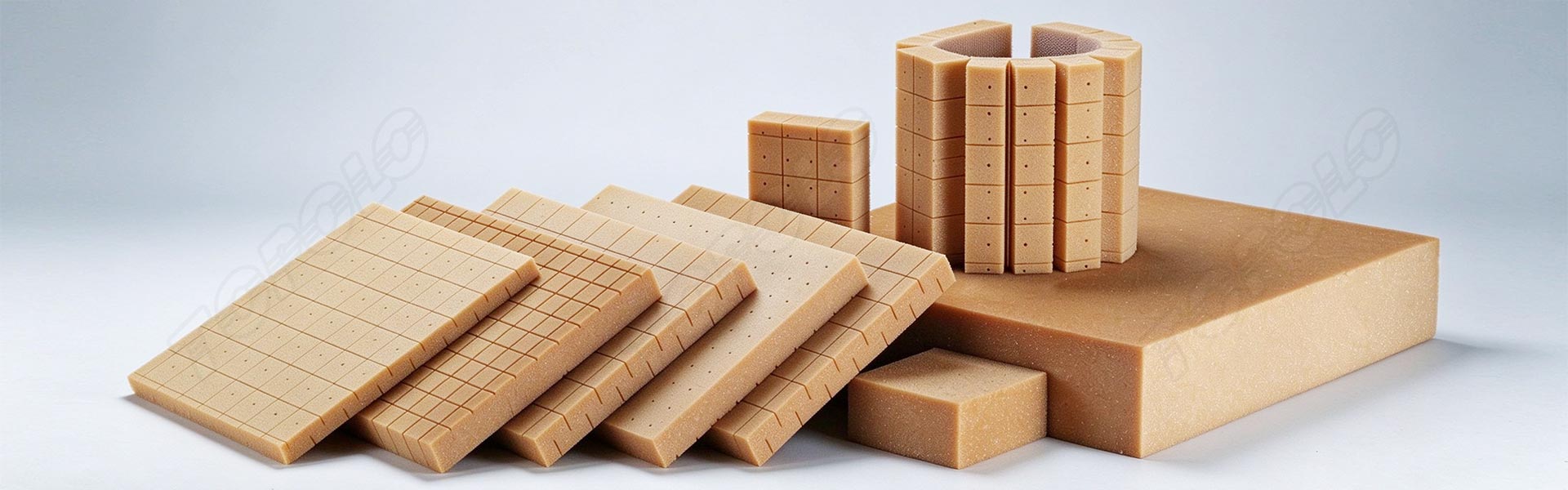
- Lightweight: PVC foam core is extremely lightweight, making the overall hull lighter and helping to improve the boat’s buoyancy and fuel efficiency.
- Higher Hardness: PVC foam core provides good structural strength, allowing the hull to have sufficient stability and durability while remaining lightweight.
- Water Resistance: PVC foam core has good water resistance and has extremely low water absorption even in humid marine environments.
- Ease of Processing: PVC foam core is easy to process and can be cut and formed according to the shape and needs of the hull to adapt to various ship designs.
Physical Properties of PVC Foam
| ITEM | P60 | P80 | P100 | P130 | P200 |
| Density(kg/m³) | 60 | 80 | 100 | 130 | 200 |
| Tensi le Strength(Mpa) | 1.8 | 2.5 | 3.5 | 4.8 | 7.1 |
| Tensi 1e Modulus (Mpa) | 75 | 95 | 130 | 175 | 250 |
| Compressive Strength(Mpa) | 0.9 | 1.4 | 2 | 3 | 4.8 |
| Compressive Modulus (Mpa) | 72 | 90 | 135 | 170 | 240 |
| Shear Strength(Mpa) | 0.76 | 1.15 | 1.6 | 2.2 | 3.5 |
Recyclable and Reusable Material – PET Foam

With its low weight, low water absorption, and sufficient structural strength, PET foam can be used as a filler material in marine applications, helping to reduce weight while enhancing structural stability.
Physical Properties of PET Foam
| Test items | Standard | Unit | Value | Procore 80 | Procore 100 | Procore 120 | Procore 150 | Procore 200 | Procore 250 |
| Density | IS0845 | kg/m3 | RANGE | 85-95 | 100-110 | 120-130 | 150-160 | 190-210 | 235-260 |
| Compressive strength | IS0844 | MPa | AVG | 0.85 | 1.20 | 1.80 | 2.40 | 3.90 | 5.20 |
| Compressive modulus | IS0844 | MPa | AVG | 73 | 100 | 115 | 140 | 200 | 235 |
| Tensile strength | ASTM C297 | MPa | AVG | 1.40 | 1.80 | 2.20 | 2.50 | 3.20 | 4.00 |
| Tensile modulus | ASTM C297 | MPa | AVG | 90 | 110 | 120 | 160 | 210 | 275 |
| Shear strength | Is01922 -2012 | MPa | AVG | 0.55 | 0.80 | 0.90 | 1.25 | 1.70 | 2.05 |
| Shear modulus | IS01922 -2012 | MPa | AVG | 13.5 | 23.0 | 27.0 | 35.0 | 51.0 | 70.0 |
| Climbing drum peel | ASTM D1781 | mm.N/m | AVG | 20 | 20 | 20 | 20 | 20 | 20 |
Processing of Foam Board
To avoid air being trapped between the core and laminate, small perforations or grooves are often added symmetrically to the core. In order for the foam core to better conform to the contours of the hull, deeper grooves are cut into its surface.
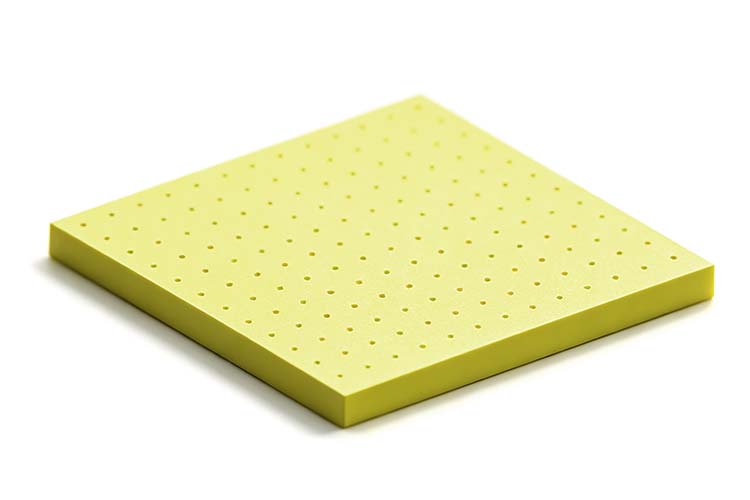
- Aperture 2 – 3 mm, hole distance 20 x 20 mm, punching thickness 5-60mm.
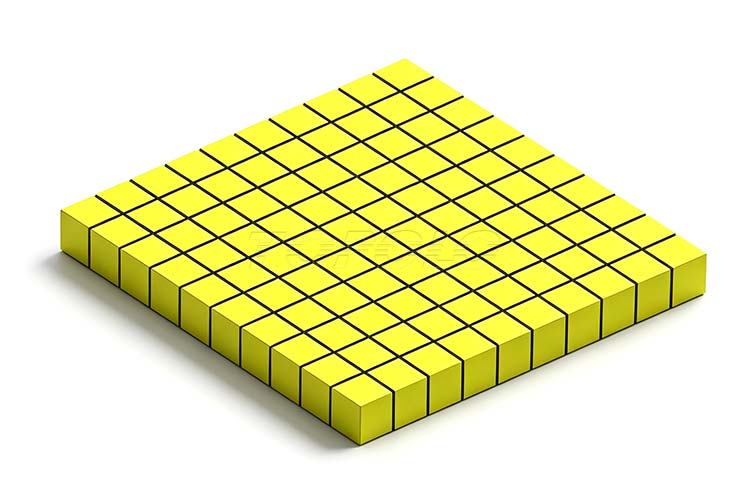
- Slot width, slot depth 2 mm, slot spacing 20 x 20 mm.
- Slot width and depth 2 mm, slot distance 20 x 20 mm, holes drilled at the junction of slots.
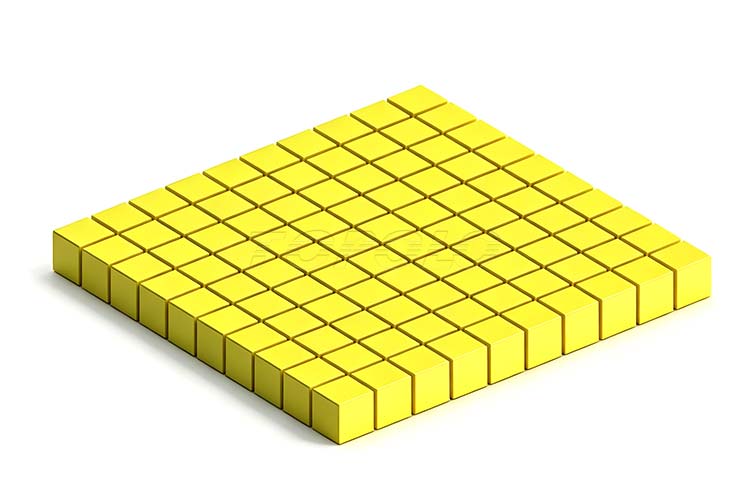
- Slot width 1 mm, leave the bottom 2 mm, slot distance 30 x 30 mm, stick mesh cloth on the back.
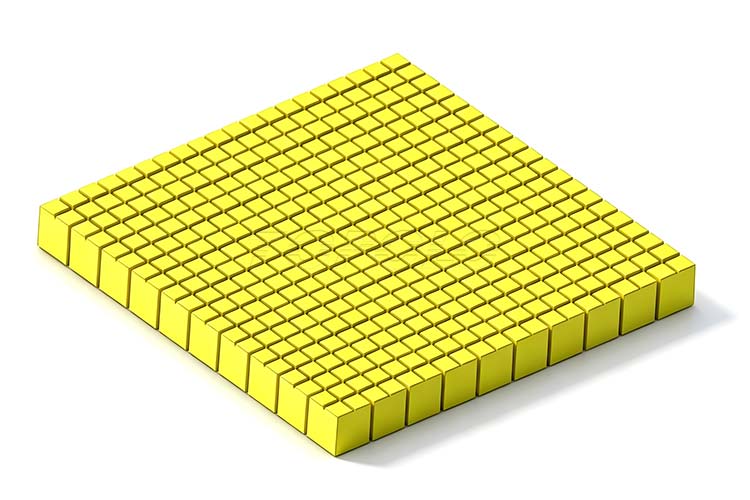
- Deep groove width 1mm,shallow groove width 2mm, shallow groove in the middle of the deep groove,groove distance 30 x 30 mm.
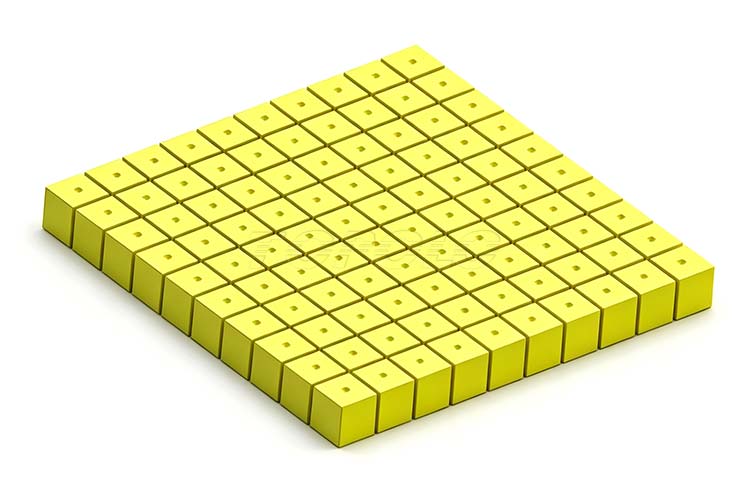
- Slot width Imm, leave bottom 2mm, slot distance 30 x 30 mm, aperture 2 mm, hole distance 30 x 30 mm, hit in the middle of the block.
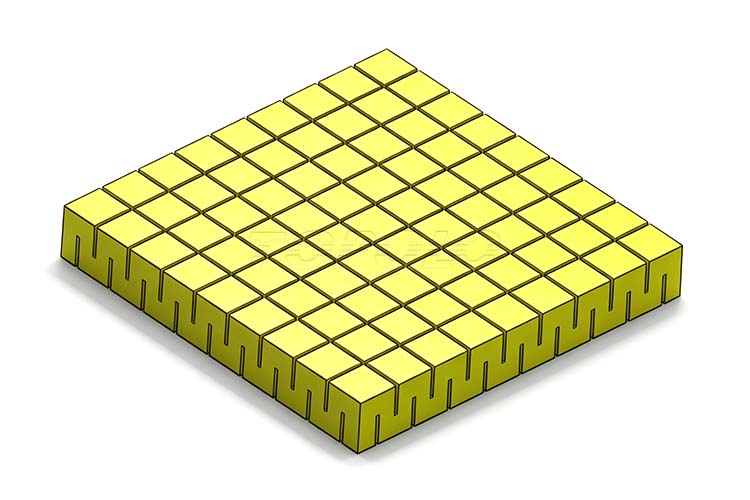
- The upper and lower slots are staggered, the depth of the slot is 55-60% of the thickness of the plate, and the slot distance is 30 x 30 mm.
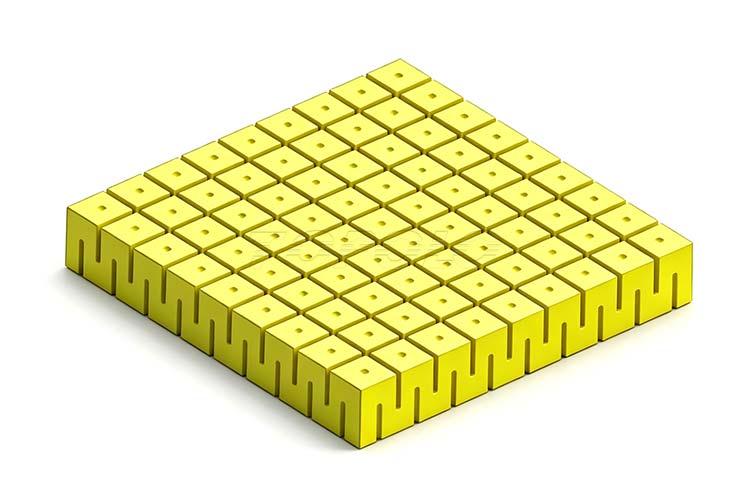
- Upper and lower slots stagger, slot distance 30 x 30 mm, hole distance 30 x 30 mm, hole in the middle of a small piece.