
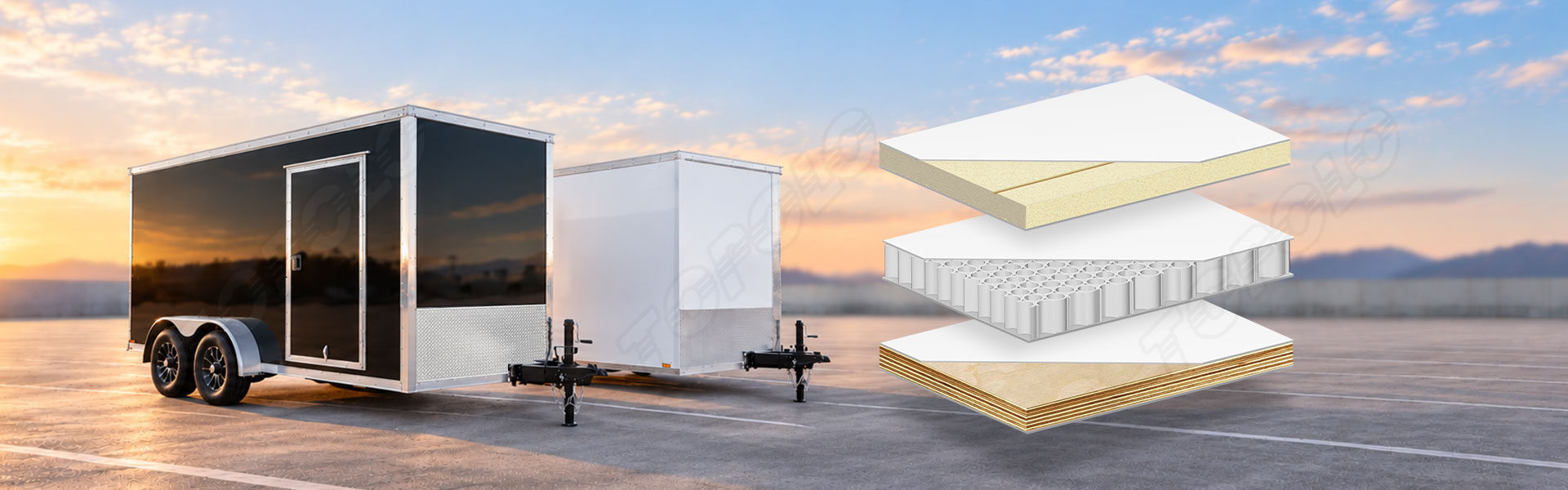
GRP Composite Panel Enclosed Cargo Trailers
Home » Trucks & Trailers » Truck & Trailer Composite Panels
Are you still planning to use metal (aluminum or steel) skins and OSB (Oriented Strand Board) for your enclosed cargo trailer project? It might be time to reconsider.
While OSB is an affordable wood-based material commonly used in enclosed trailers, it falls short in terms of weight, durability, and health standards. Trailers built with OSB tend to be heavy; they are also prone to moisture absorption, which leads to warping and, eventually, rot. Furthermore, some OSB products contain adhesives that release volatile organic compounds (VOCs) harmful to human health. For trailer manufacturers and upfitters, it is time to explore new, high-performance materials.
Composite Materials: The New Trend
- More Durable Composite Panels
- Making Trailer Construction Simpler
TOPOLO offers a range of lightweight GRP (FRP—fiberglass-reinforced plastic) composite panels that serve as an excellent alternative to OSB and metal skins, outperforming them in every key aspect.

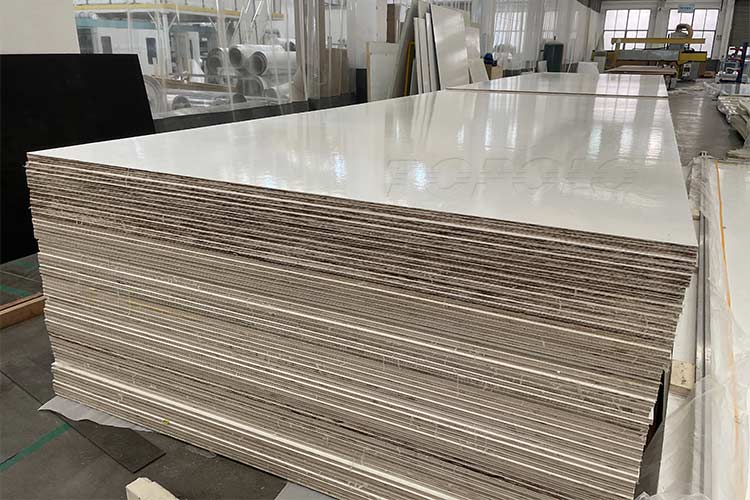


As a substitute for metal, GRP sheets are lighter and offer superior rigidity. Like many pre-painted metal sheets, they can be finished in a variety of colors; however, GRP surfaces can achieve a mirror-like, high-gloss finish that remains durable over time.
We provide GRP composite panels with various core structures—including closed-cell foam, polypropylene honeycomb, and plywood—offering buyers a wide range of options. These panels enable simpler, more functional designs. Users have already provided positive feedback, highlighting benefits such as moisture resistance in rain and snow, mold resistance during wet weather, and reduced overall trailer weight, which enhances maneuverability on the road.
These composite panels are constructed by bonding a core material between GRP skins to create a single, integrated panel, which is then assembled to form the trailer box. This “skin-core-skin” sandwich structure ensures that both the exterior and interior surfaces are smooth and seamless. As a result, the enclosed trailer offers exceptional stain and water resistance, making it ideal for transporting livestock—such as horses, cattle, sheep, or pigs—as well as unpackaged, exposed cargo.
Specifications
| Facing Materials | FRP (GRP) Sheets |
| Core Materials | XPS(Extruded Polystyrene) Foam PVC(Polyvinyl Chloride) Foam PU(Polyurethane) Foam PET(Polyethylene Terephthalate) Foam PP(polypropylene) Honeycomb Plywood |
| Lamination Methods | Adhesive bonding |
| Width | ≤ 3.2m |
| Length | ≤ 12m |
| Thickness | 10-150 mm |
| Surface Color | RAL Color Series |
| Surface Finish | Glossy, matte, embossed. |
Types of GRP Composite Panels

(PET, XPS, PVC, etc.)
Featuring closed-cell, waterproof foam; an ideal choice for thermal insulation.
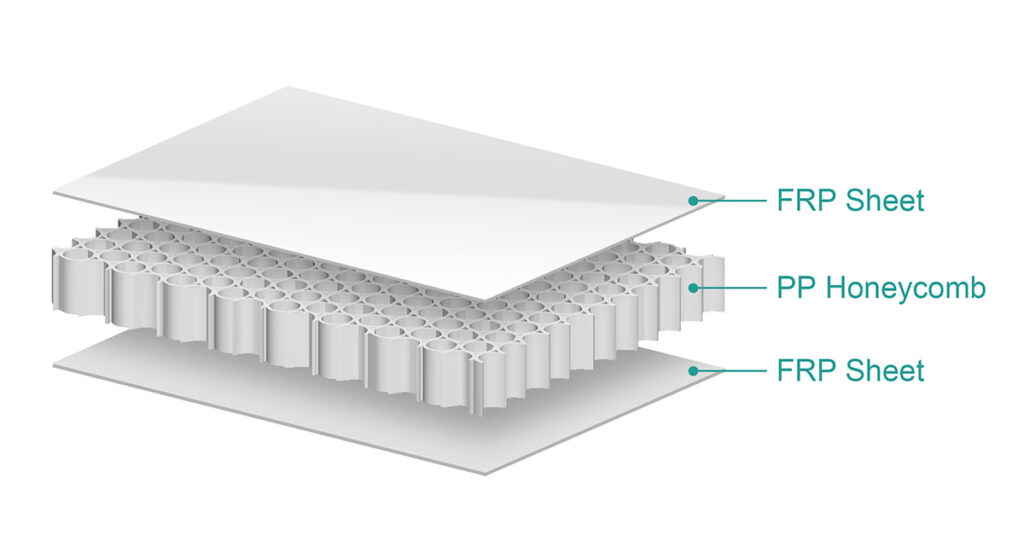
(Polypropylene Honeycomb)
Featuring a thermoplastic polypropylene honeycomb core; the preferred option for lightweight applications.
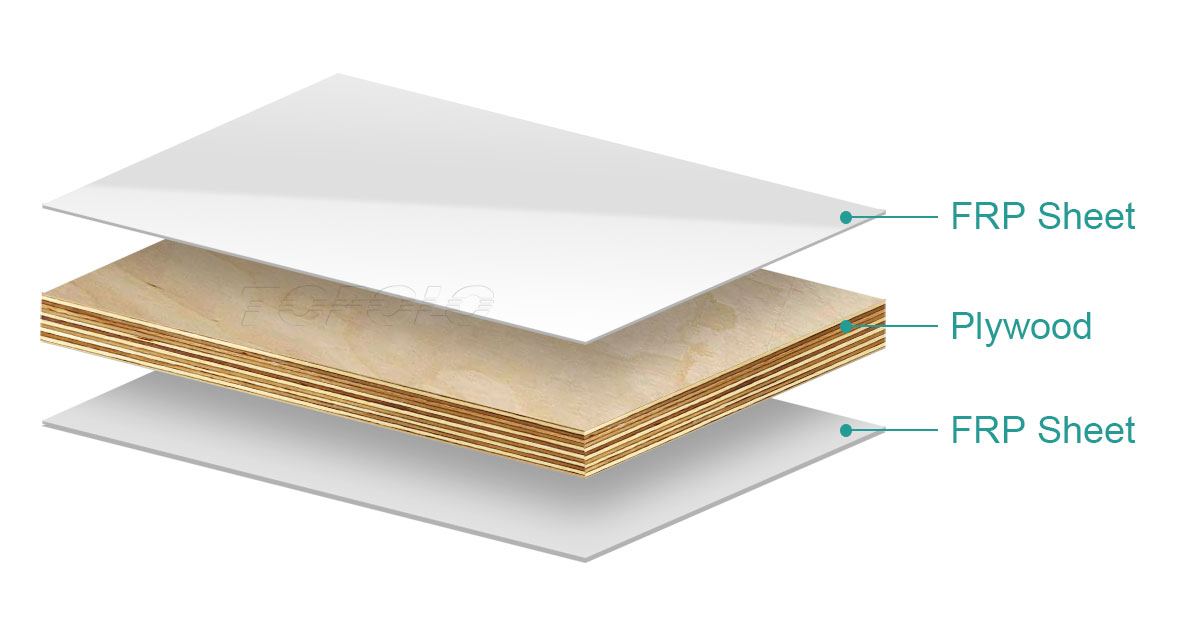
(Poplar, Birch, Eucalyptus, Pine, etc.)
Featuring marine-grade plywood; offers high structural strength.
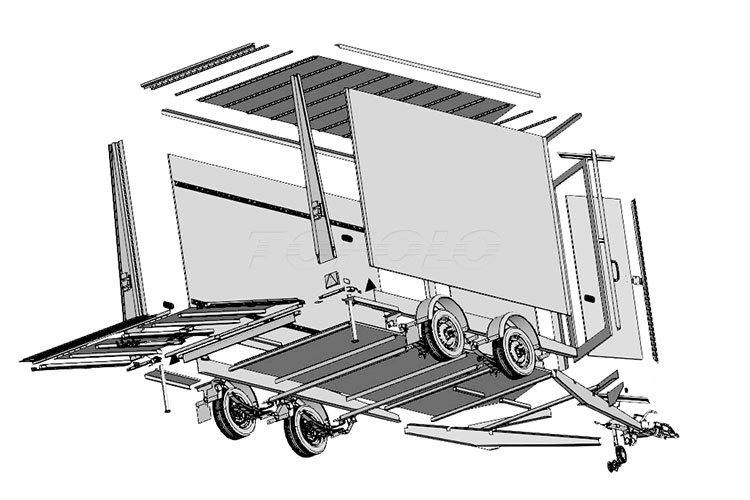
Modular Construction Enhances Building Efficiency
Beyond improving trailer performance, composite panels also boost construction efficiency. Trailer bodies are divided into sets of GRP composite panel kits; these modular kits streamline the assembly process—a significant advantage for manufacturers who source components via CKD (Completely Knocked Down) or SKD (Semi-Knocked Down) kits. Furthermore, these modular components are easy to disassemble, simplifying both modifications and maintenance.
Contact us for a comprehensive solution tailored to your enclosed cargo trailer projects.