

Basic Specifications
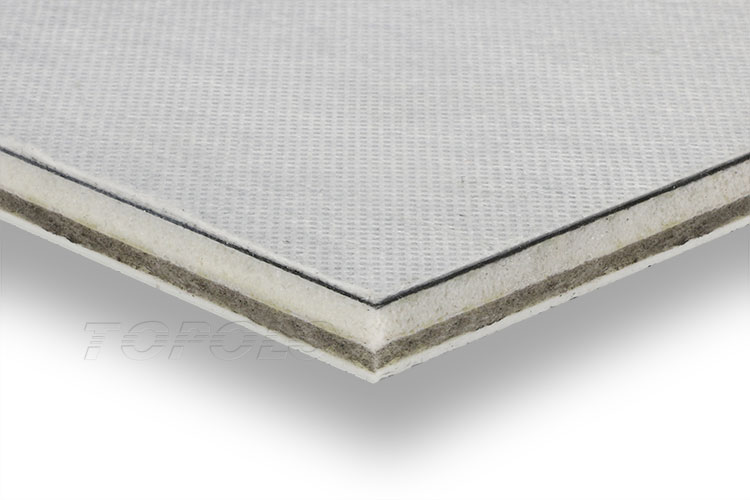
- Total Thickness: 10.0mm. (Customized: 5.0~120mm).
- Length: ≤12m.
- Width: ≤3.2m.
- Upper Surface Layer: 1.2mm CFRT Sheet + non-woven fabric.
- Core Layer: 4.0mm 100kg/m³ PET foam.
- Lower Surface Layer: 2.0mm FRP sheet + 3.0mm GMT.
- Area Weight: 5.94kg/m².
Description
Ramps on horse transport vehicles must withstand concentrated trampling, impact loads, and repeated dynamic loads generated by horses getting on and off the vehicle during daily use. They may also be subjected to crushing and collisions from handcarts, feed carts, and other loading and unloading equipment. Therefore, ramps not only need sufficient load-bearing capacity but must also be lightweight, waterproof, corrosion-resistant, and durable. Choosing suitable materials for construction is crucial.


Composite sandwich panels with PET foam as the core combine a lightweight foam core with a high-strength outer layer to form a unified structure, providing good rigidity and load-bearing capacity at a relatively low weight.
- Compared to traditional heavy wooden boards or single metal sheets, the PET foam sandwich structure effectively reduces the weight of the ramp while maintaining structural strength, making it easier to open, close, and operate.
- PET foam composite structures have good fatigue durability and impact resistance. Combined with reasonable metal frames, hinges and reinforcement structures, the overall load-bearing capacity and service life of ramp doors can be further improved.
Structural Diagram
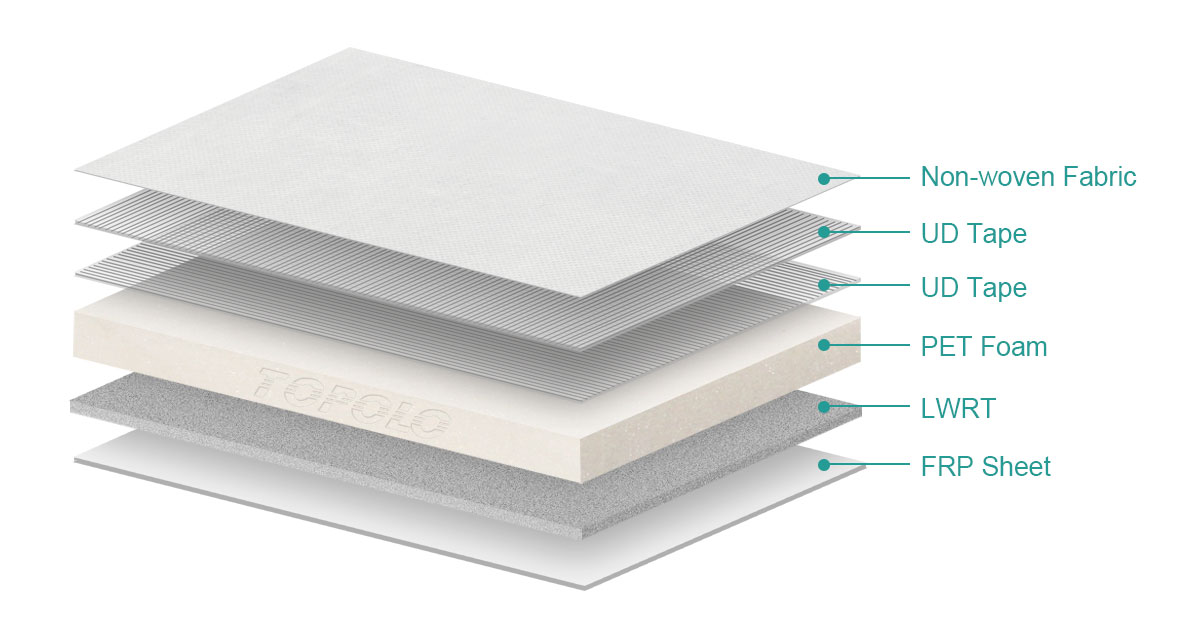
- Adding a layer of LWRT (Lightweight thermoplastic materials) inside the PET sandwich panel can greatly improve its load-bearing capacity without increasing the weight.
- Add a layer of non-woven fabric to the surface of the PET sandwich panel to make it closely adhere to the non-slip rubber floor.
- Using CFRT (continuous fiber reinforced thermoplastic) as the skin can enhance the compressive strength of the panel.